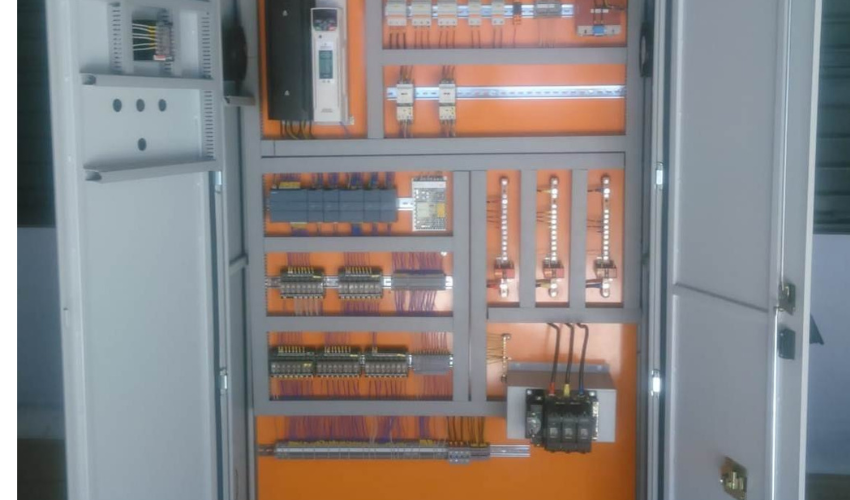
Established in 2015, Vijasen Electricals is a renowned manufacturer and supplier of the APFC Control Panel.

Oil Machine Control Panel

plc Control Pannel

Oil Machine Control Panel

An Oil Machine Control Panel is an essential component in the operation and automation of oil processing machinery. It manages and monitors the various functions of oil extraction, refining, or lubrication systems, ensuring safety, efficiency, and precision.

Types of Oil Machine Control Panels

Oil Extraction Machine Control Panel

  • Used in oil mills and refineries for processing seeds (soybean, sunflower, palm, etc.).
  • Controls temperature, pressure, and extraction efficiency.

Hydraulic Oil System Control Panel

  • Manages hydraulic pumps and lubrication systems.
  • Ensures proper oil flow, pressure regulation, and machine safety.

Oil Refinery Control Panel

  • Used in crude oil processing and refining plants.
  • Monitors distillation, cracking, and purification processes.

Lubrication Oil System Control Panel

  • Controls the circulation of lubricating oil in engines and machinery.
  • Includes temperature and viscosity monitoring.

Main Components of an Oil Machine Control Panel

1. Electrical Components

  • Circuit Breakers & Fuses – Protect against overcurrent and short circuits.
  • Contactors & Relays – Control high-power electrical components.
  • Variable Frequency Drives (VFDs) – Adjust motor speed and efficiency.

2. Sensors & Monitoring Devices

  • Pressure Sensors – Ensure proper oil pressure levels.
  • Temperature Sensors – Prevent overheating.
  • Flow Meters – Monitor the rate of oil movement.

3. Control & Display Units

  • Programmable Logic Controller (PLC) – Automates processes and provides precision control.
  • Human Machine Interface (HMI) or Touchscreen Display – Allows
  • operators to monitor and adjust settings.
  • Alarm Systems – Alerts for faults like low oil levels, high temperatures, or pump failures.

Functions of an Oil Machine Control Panel

  • Automates oil extraction, refining, or lubrication processes.
  • Regulates motor speed and pressure for efficiency.
  • Provides real-time monitoring and alerts.
  • Ensures safety through emergency shutdown features.
  • Reduces energy consumption with optimized control systems
Leo
Whatsapp