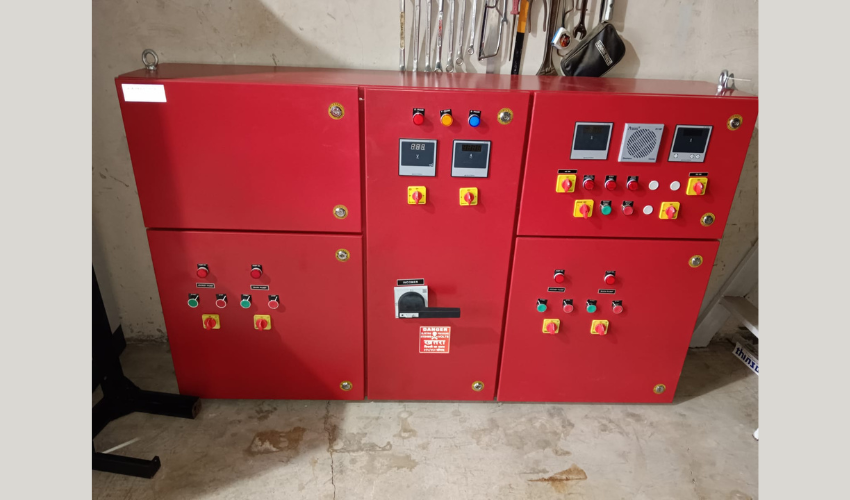
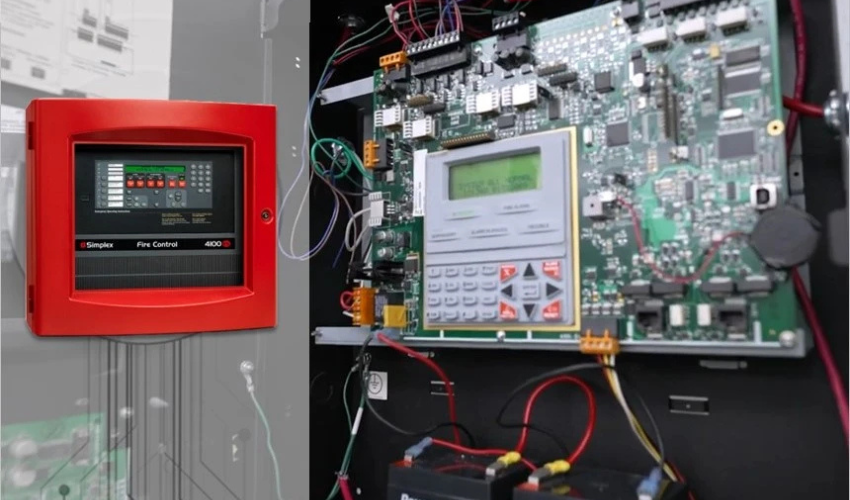
Fire Control Panel
A Fire Control Panel (FCP), also known as a Fire Alarm Control
Panel (FACP), is the central component of a fire alarm system. It
monitors inputs from various fire detection devices, processes the
information, and triggers alarms and other emergency responses
when necessary.
Types of Fire Control Panels
1. Conventional Fire Alarm Panels
- Divides a building into zones.
- Uses multiple circuits wired to different detectors.
- Requires manual identification of the specific device that triggered the
alarm.
2. Addressable Fire Alarm Panels
- Each device (smoke detectors, heat detectors, pull stations) has a
unique address.
- Allows precise identification of the alarm location.
- More advanced and suitable for large buildings.
3. Hybrid Fire Alarm Panels
- Combines features of conventional and addressable systems.
- Can be useful for upgrading older systems.
4. Wireless Fire Alarm Panels
- Uses radio signals instead of wired connections.
- Easier installation in heritage or hard-to-wire buildings.
Main Components of a Fire Control Panel
- Power Supply (Main power & backup batteries)
- Microprocessor/Processor Unit (Processes inputs and controls outputs)
- Alarm Notification Devices (Sirens, strobe lights, speakers)
- Fire Detection Inputs (Smoke detectors, heat detectors, manual pull stations)
- Control Buttons (Silence, reset, test mode) Display Screen/LED Indicators (Shows system status, alarms, faults)
Functions of a Fire Control Panel
- Detects fire and smoke using connected devices.
- Triggers alarms to alert occupants.
- Activates emergency protocols, such as shutting down HVAC systems or unlocking exit doors.
- Communicates with monitoring stations for emergency response.