- Call Us: +91 9158077252
- info@vijasenelectricals.in

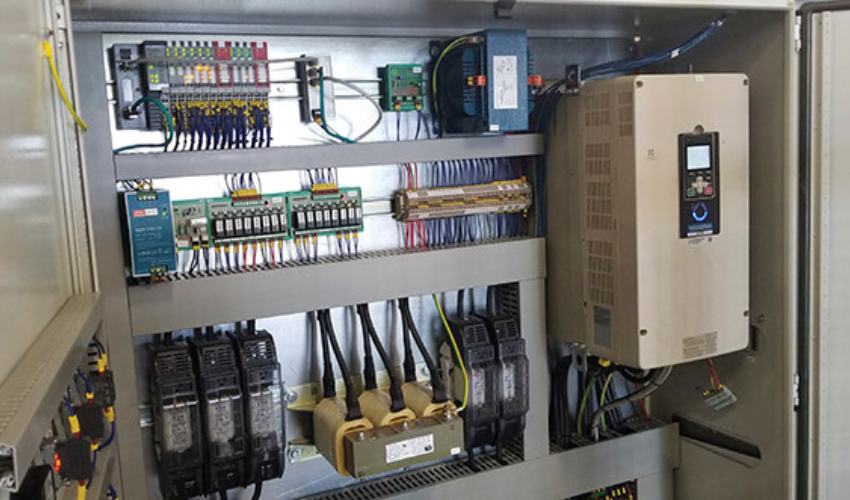
A Temperature Controller with VFD is a system that regulates motor speed (fans, pumps, compressors, etc.) based on real-time temperature variations. This setup is commonly used in HVAC, furnaces, chillers, cooling towers, and industrial processes to enhance energy efficiency and precise temperature control.
How Temperature Controller Works with VFD
1.Temperature Sensor (RTD, Thermocouple, or Infrared Sensor)
2.Temperature Controller (PID Controller, PLC, or HMI)
3.Variable Frequency Drive (VFD)
4.Motor (Fan, Pump, Blower, or Compressor)
Benefits of Temperature Controller with VFD
Applications of Temperature Controller with VFD


At Vijasen Electricals, we power industries with smart, efficient, and safe electrical solutions. Contact us today to discuss your control panel needs!..Read More
© 2025 Vijasen Electricals All rights reserved. Designed By - Vyapar Solution